
Before You Begin
Skill Level: Intermediate
Technique: Traditional Piecing
Time Required: About 10–15 minutes
Tools Needed: Sewing machine, rotary cutter, quilting ruler, iron, two fabric squares
Introduction
The four-at-a-time method is a quick way to create four identical Half-Square Triangles from just two fabric squares. Unlike the two-at-a-time and eight-at-a-time methods, this technique creates bias edges on every unit, so careful handling during pressing and trimming is especially important.
When sewn and trimmed accurately, it's an efficient option for quilts that use many HSTs.
Step 1 – Layer the Squares
Place one light square and one dark square right sides together.
Align all four edges carefully.
Step 2 – Sew Around All Four Sides
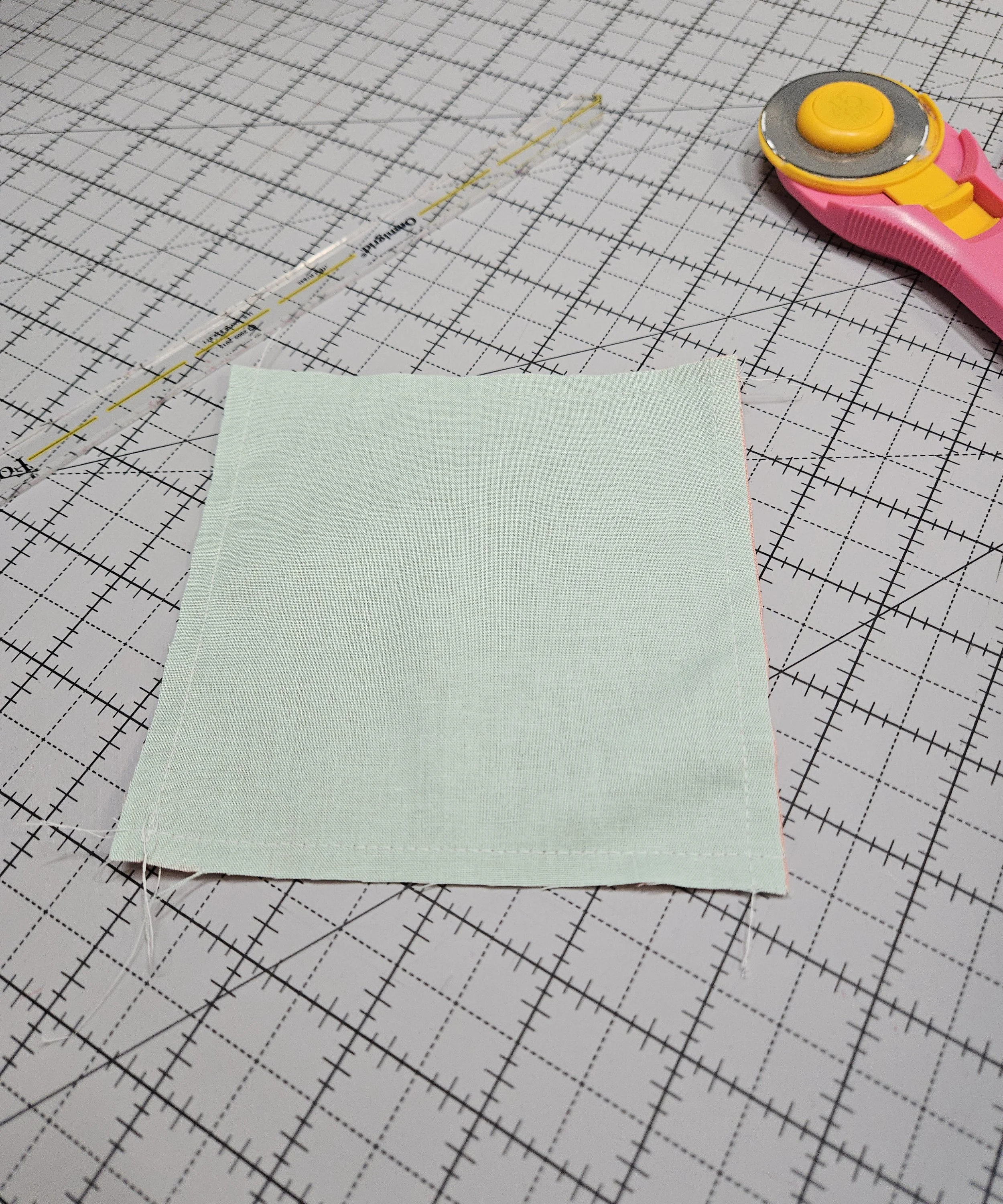
Using a ¼" seam allowance, sew completely around all four sides of the square.
Backstitch is not necessary.
Try to maintain a consistent seam allowance on all four sides.
Step 3 – Cut Diagonally
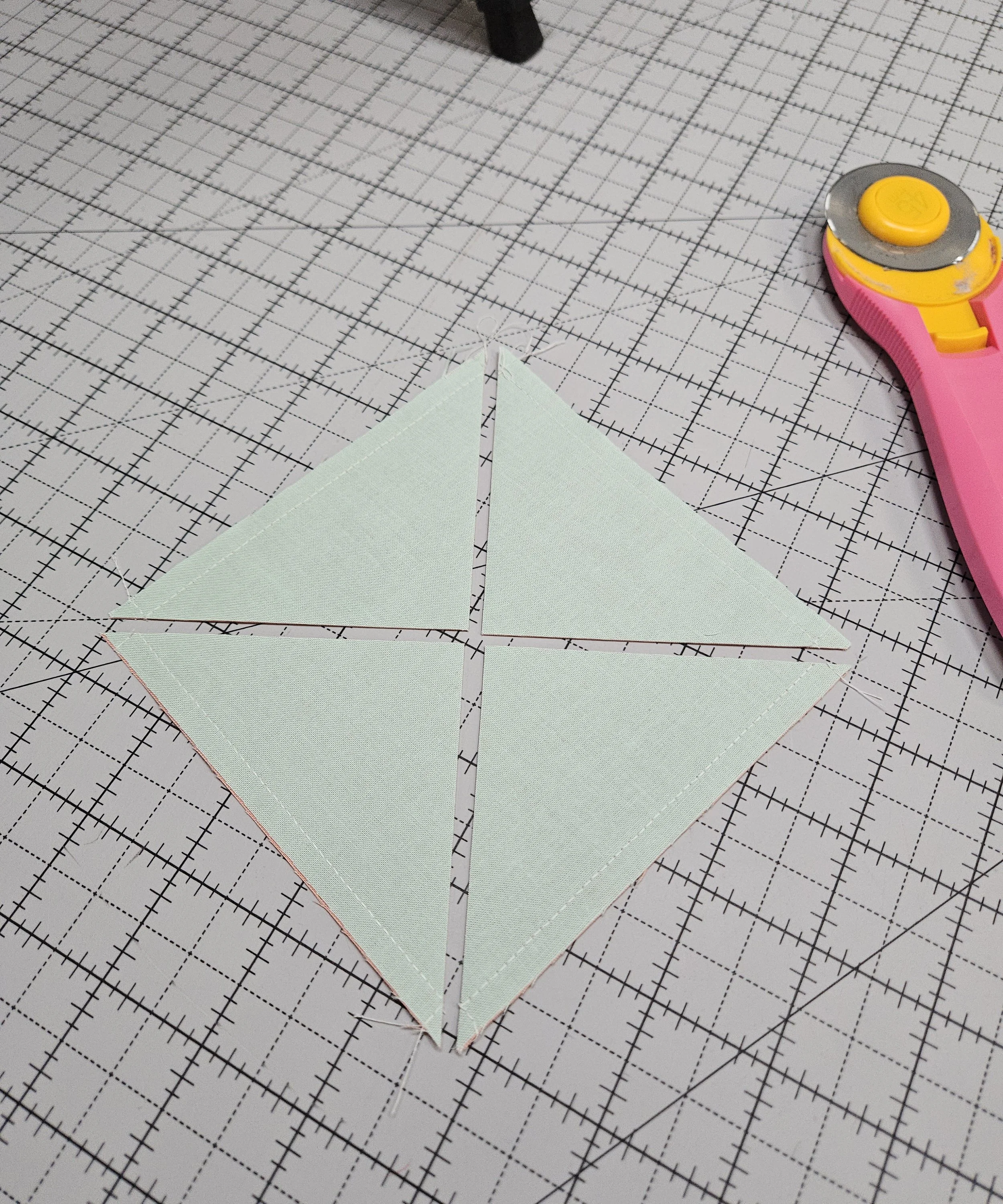
Using a rotary cutter and ruler, cut the sewn square diagonally from corner to corner.
Without moving the pieces, make the second diagonal cut through the remaining corners.
You now have four Half-Square Triangles.
Step 4 – Press Carefully
Open each unit and press.
Because all four outside edges are cut on the bias, lift and press the iron rather than sliding it across the fabric.
Avoid stretching the units while handling them.
Step 5 – Trim to Size
Trim each HST to the unfinished size listed in your pattern.
Align the 45° line on your ruler with the sewn seam before trimming all four sides.
My Tip
Because every outside edge is on the bias, I handle these units a little more gently than HSTs made with other methods. A light touch while pressing goes a long way toward keeping them square and accurate.
Frequently Asked Questions
-
The diagonal cuts create bias edges on all four sides of each unit. Bias fabric naturally stretches more than straight grain fabric.
-
Many quilters like to use spray starch or sizing before cutting because it helps stabilize the bias edges.
-
Yes. Trimming ensures all four HSTs finish at the same size and improves block accuracy.
-
The four-at-a-time method works well when you need multiple identical HSTs and don't mind working with bias edges. If maximum stability is important, consider the two-at-a-time or eight-at-a-time methods instead.
