
Before You Begin
Skill Level: Intermediate
Technique: Traditional Piecing
Time Required: About 15–20 minutes
Tools Needed: Sewing machine, rotary cutter, quilting ruler, marking pencil, iron, one large square, four small squares
Introduction
The no-waste Flying Geese method creates four identical Flying Geese units from one large square and four smaller squares. Because all four units are made at the same time, it's one of the fastest and most fabric-efficient methods when your pattern calls for multiple Flying Geese of the same size.
Although there are several ways to make Flying Geese, this is often my preferred method when I need several matching units.
Step 1 – Prepare Your Squares
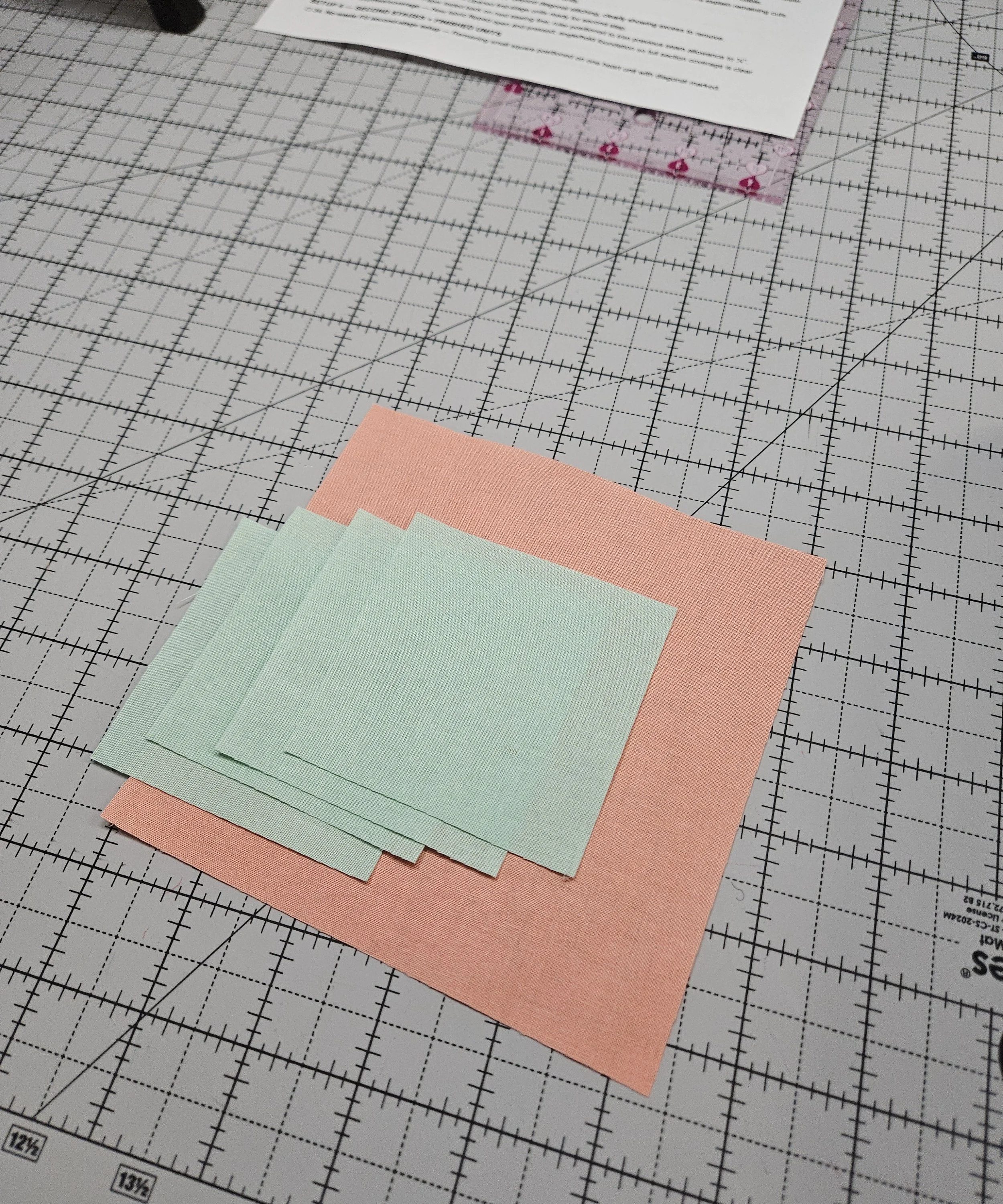
Gather one large square and four smaller squares according to your pattern.
On the wrong side of each small square, draw a diagonal line from corner to corner.
My preference is to use an “add a quarter” type tool and mark 1/4” from the center.
Step 2 – Add the First Two Squares
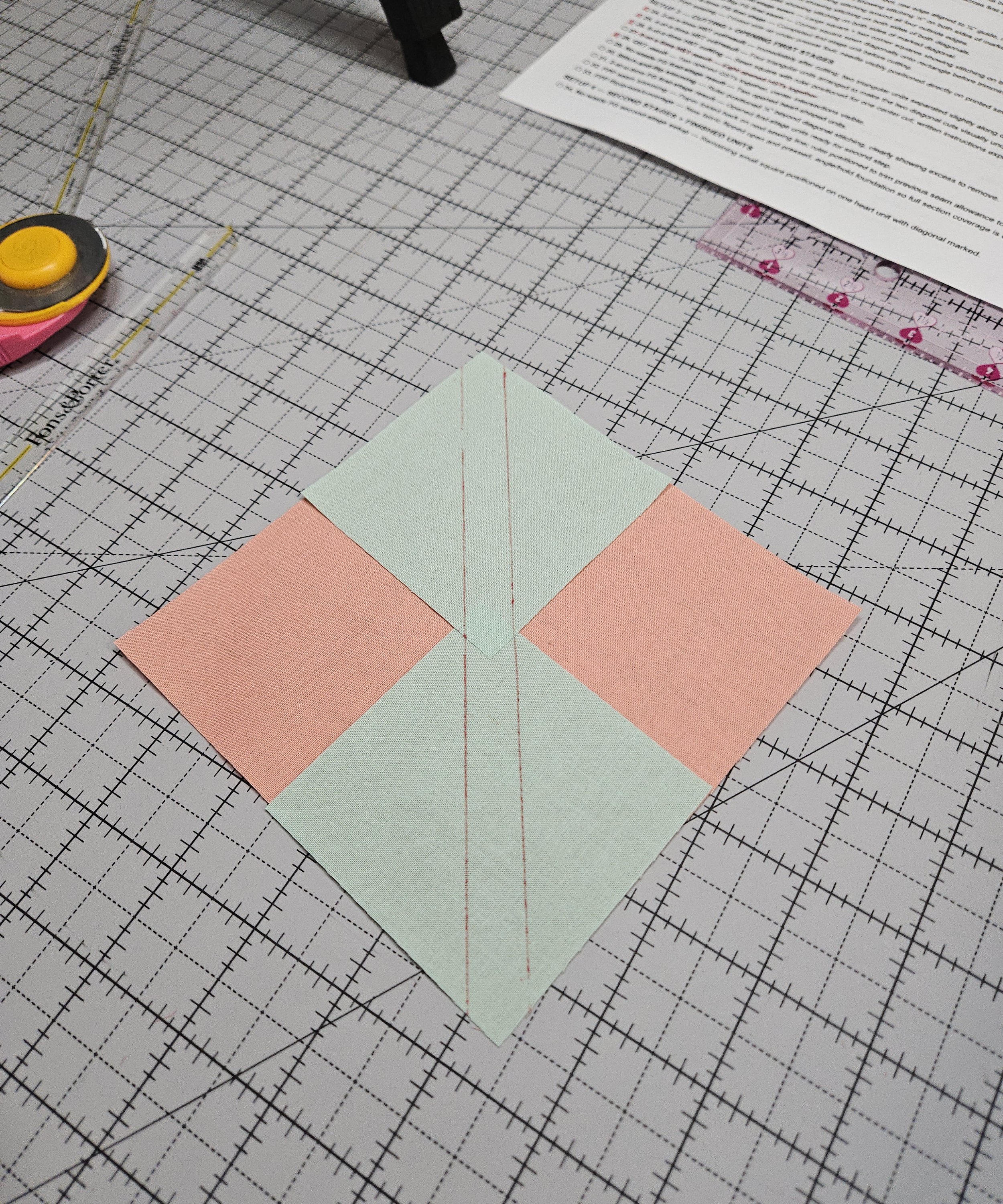
Place two small squares on opposite corners of the large square, right sides together.
The marked diagonal lines should form one continuous line across the large square, and the small squares will overlap slightly in the center.
Sew a ¼" seam on both sides of each marked line or on the line if you mark a line 1/4” from center on each side.
Step 3 – Cut and Press
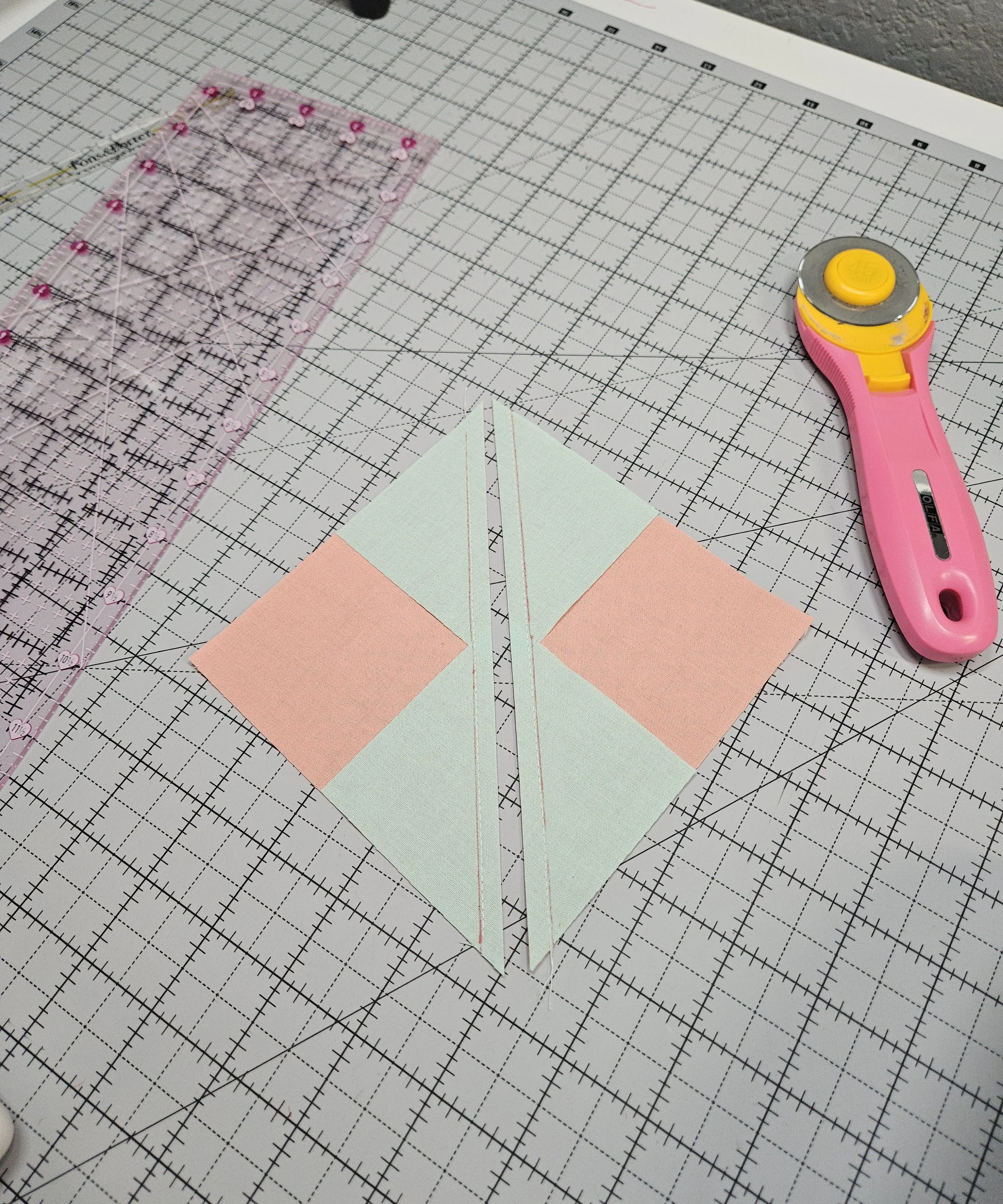
Cut along the marked diagonal line.
Open the units and press the small triangles away from the center.
You now have two heart-shaped units.
Step 4 – Add the Remaining Squares
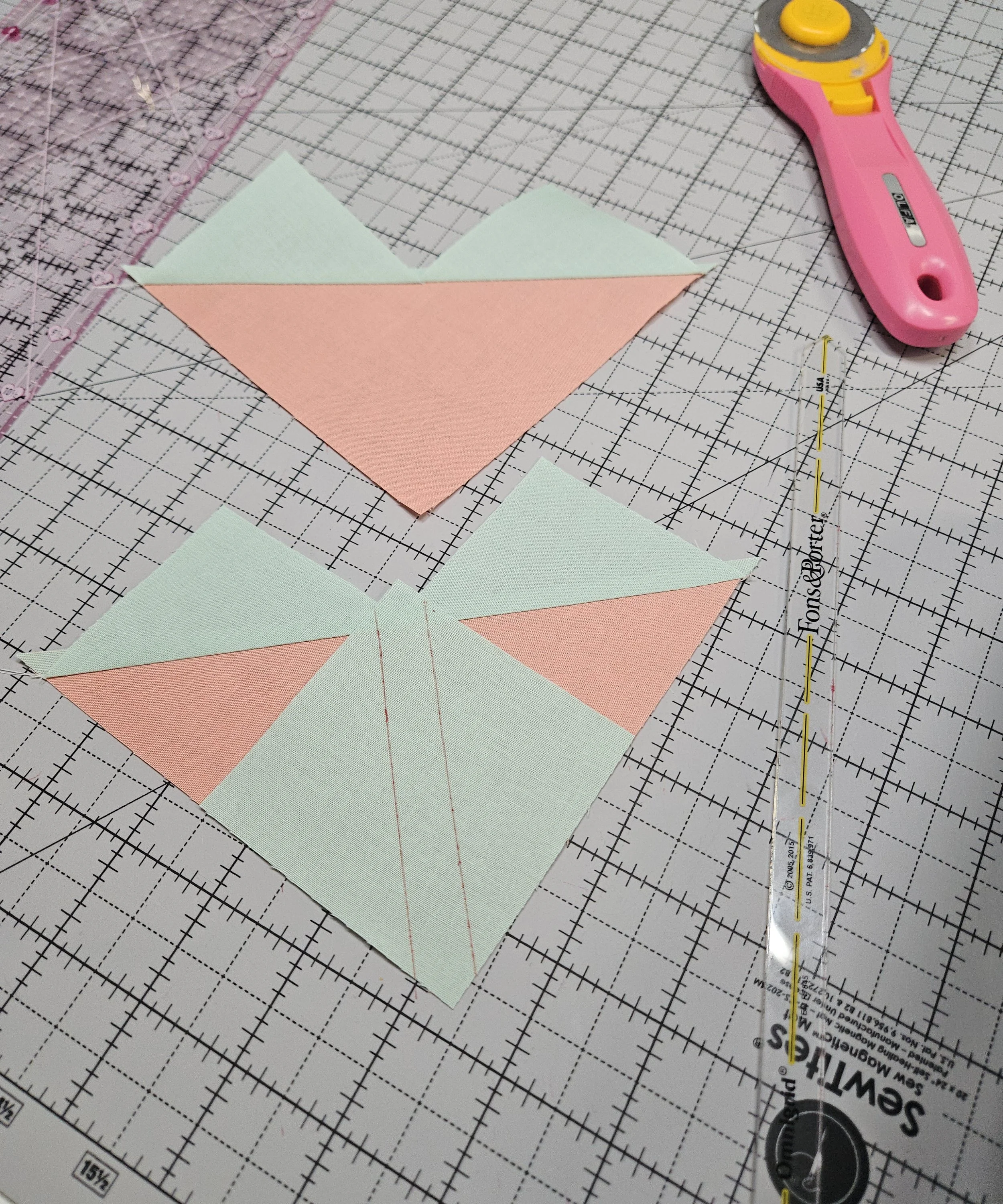
Place one remaining small square on each unit, right sides together.
Draw or align the diagonal line as directed by your pattern, then sew a ¼" seam on both sides of the marked line.
Step 5 – Cut, Press, and Trim
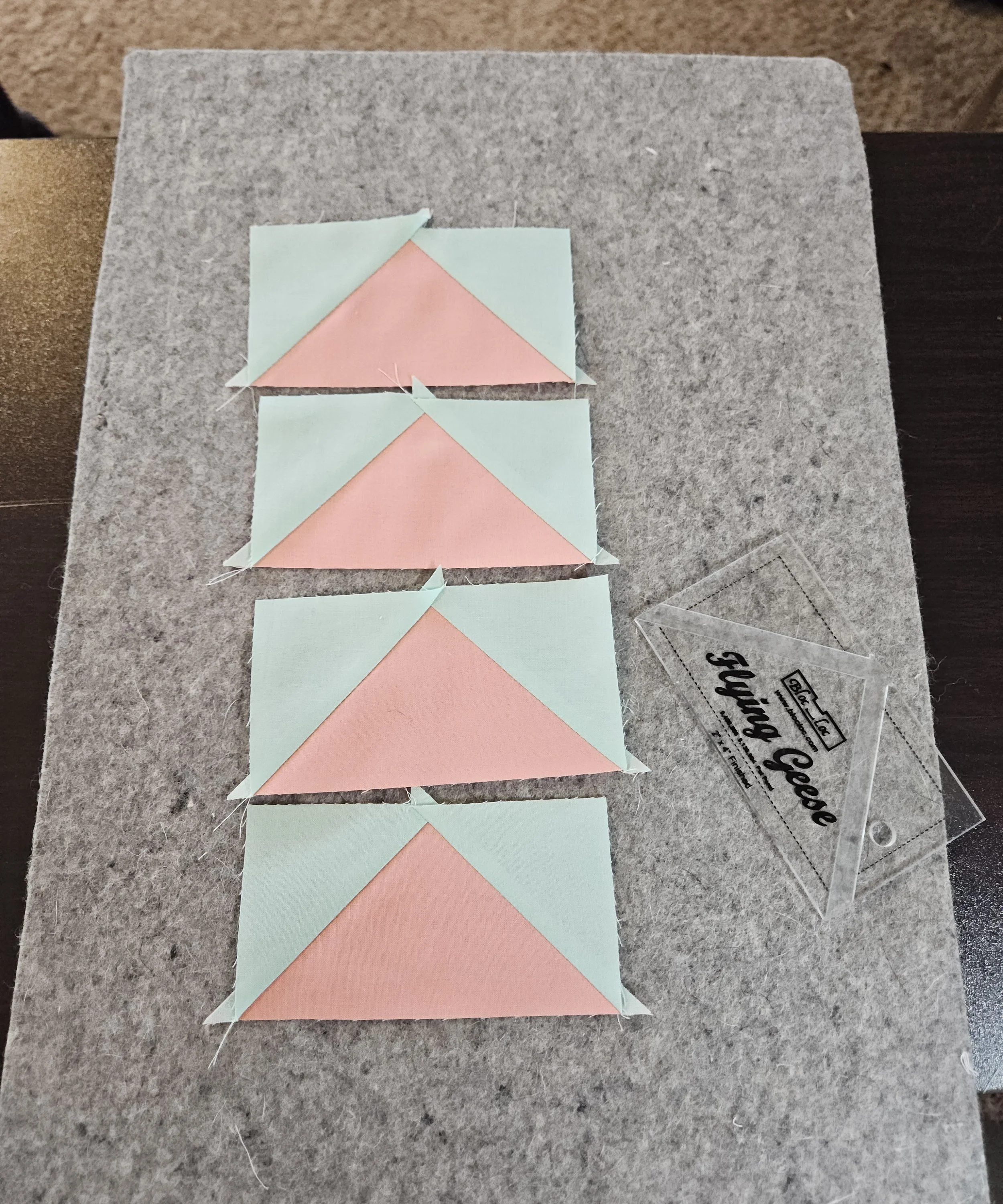
Cut along the marked line, open the units, and press.
You now have four Flying Geese units.
Trim each unit to the unfinished size listed in your pattern if needed.
My Tip
Before sewing the first seam, I always double-check that the diagonal lines on the first two squares form one continuous line across the large square. If one square is rotated the wrong way, you'll still end up with four units—but they won't be Flying Geese!
Frequently Asked Questions
-
Unlike stitch-and-flip construction, this method uses nearly all of the fabric and creates four Flying Geese units without trimming away large corner pieces.
-
The most common causes are seam allowance accuracy and not trimming the units after sewing. Check your ¼" seam allowance first.
-
You can, but it's most efficient when you need all four units. If your pattern only calls for one or two Flying Geese, the stitch-and-flip method may be a simpler choice.
-
Accurate seam allowances and careful trimming make the biggest difference. Be sure to press before trimming and use the reference points on your ruler to square up each unit.
